
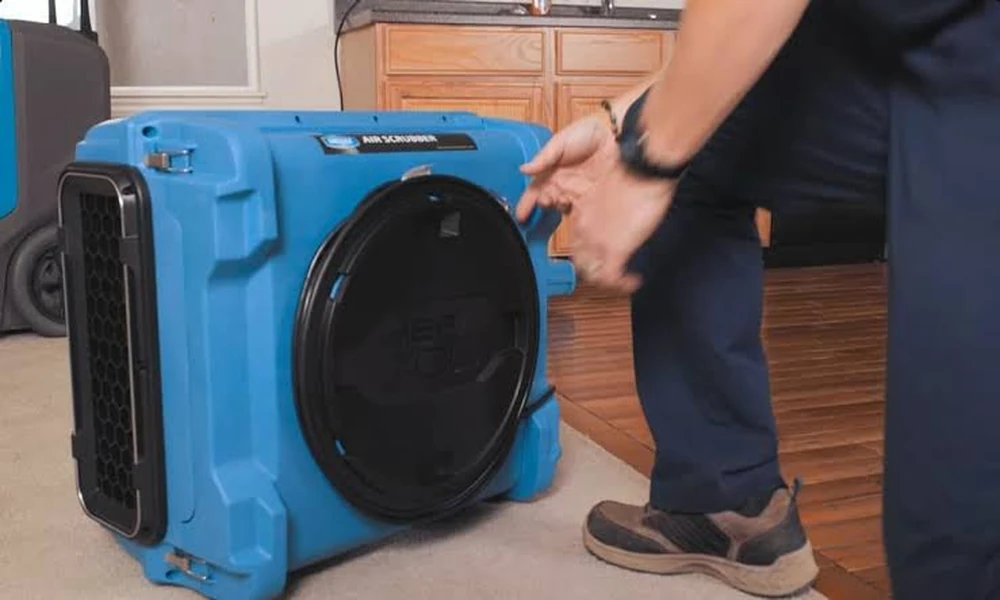
A HEPA air scrubber can make sense in a Toronto cleanup, but only after the reader has stated the air question clearly. In a room where a small clean-water leak disturbed old storage materials and drywall dust, filtration is not a substitute for removing wet material or understanding why water was there. It is a possible response to a separate particulate concern.
Question one: what is actually airborne in the work area?
Begin with the activity that created the concern. Was dust released while boxes were moved? Did a repair expose debris near a wall? Is the issue limited to a work corner, or has it spread through a room that people still need to use? Those questions make the filtration decision concrete without attaching a dramatic label to ordinary cleanup dust.
It also helps to distinguish a visible particle concern from a general stale-room impression. A closed lower level can feel unpleasant after a leak even when the immediate issue is humidity, a damp material or lack of fresh airflow. The right category depends on the condition that can actually be observed and rechecked.
For this rubric, the first note should name the work zone, the materials being moved and the point where particles appear most noticeable. That note prevents a device intended for air cleaning from being chosen because the room simply feels unsettled.
Question two: what is still wet, and what has already been handled?
Filtration does not remove water held in carpet, cardboard, fabric or wall materials. Before comparing air equipment, list the materials that were wet, whether they have been removed or exposed, and whether an edge remains uncertain. The room may need a water-removal or drying step first, or it may need a closer inspection before any rental category is added.
This question matters because moving wet materials can release dust at the same time. Two conditions can be present without being the same problem. A useful plan says which action deals with the material and which action deals with the air, so the person setting up equipment is not asked to infer the whole strategy from a single machine.
That separation also makes the cleanup easier to explain to a landlord, insurer or incoming tradesperson. Each person can see what was wet, what was moved and what remains to be checked without assuming that the filtration choice completed every other part of the work.
For a compact Toronto work zone, this clarity can prevent a small project from sprawling. The person sorting materials can work from a defined area, the equipment can be placed with a stated purpose, and the next visitor can see what remains unresolved without reopening every assumption made at the start.
Question three: does the particle concern remain after material handling?
Once wet or damaged contents have been addressed appropriately, return to the work area and ask whether the particulate concern is still present. If it is, readers can review Toronto options for HEPA air scrubber as a category reference. The page is useful for considering an air-cleaning role; it does not establish a diagnosis for the room.
Placement should follow the work zone rather than the open middle of the basement. Think about where sorting happened, whether doors need to remain usable, and whether the device would interfere with a safe walking route. A well-placed unit with a clear purpose is more useful than a broad claim that the entire lower level needs air treatment.
The rubric should also allow a no-rental answer. If the particles were limited to a cleanup moment and the room no longer has a distinct air concern, the better result may be to finish ordinary cleaning, document the condition and move on to the material or moisture question that remains.
The same rule applies in reverse. If the room still has a persistent moisture issue after the storage and dust are dealt with, the reader should not keep asking filtration to solve it. Separate questions produce separate choices, which is safer and more useful than adding equipment simply because the cleanup has more than one moving part.
Question four: what will trigger a different next step?
Set a single check before the room returns to normal use. It might be the condition of the carpet edge, the absence of visible dust around the work area, or the way the room feels after it has been closed for a reasonable interval. The check should be specific enough to tell the reader whether filtration, drying or extraction needs to be reconsidered.
Where the remaining issue is water held in carpet or another absorbent layer, the Toronto carpet water extractor rental page is a separate rental reference. It belongs in a different part of the sequence from the air-scrubber decision, with its own placement and follow-up questions.
The point of this Toronto rubric is restraint. Identify the airborne concern, keep wet materials in their own lane, choose filtration only when the air question survives the first cleanup, and preserve a clear reason to change the plan if the room does not respond as expected.
That kind of restraint is practical, not passive. It lets the reader act on a clear particle concern while leaving room to reassess water, humidity and material conditions without claiming that the first rental category settled every question.
