
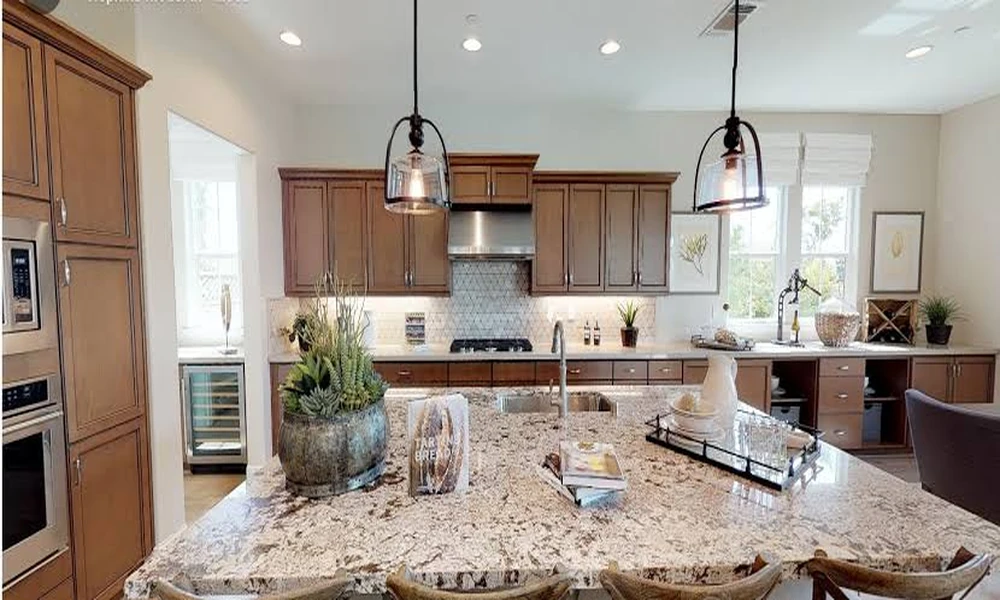
Cabinets usually win the budget fight in a kitchen renovation. Planning guidance from the National Kitchen & Bath Association puts cabinetry and hardware at about 29 percent of total project cost. Installation takes about 17 percent, appliances 14 percent and countertops 10 percent. NKBA also recommends holding back 10 to 20 percent for contingencies. Plumbing rarely gets its own headline number. Even so, it decides how much of that contingency gets spent, because most of the expensive surprises sit inside walls and under floors.
That pattern shows up clearly in Madison kitchen remodels, where much of the housing stock predates modern piping. Opening a wall in an older home on the east side or near the isthmus can reveal galvanized supply lines, cast iron drains, or a past owner’s improvised fix. Each of these can change the scope after demolition has already started. Knowing where the money goes, line by line, makes it easier to decide which changes are worth paying for.
For homeowners planning this kind of project, Maddison kitchen remodels are a core part of what 4 Lakes Plumbing does through its Bathroom and Kitchen Remodel service. Fixture installation, water line relocation and re-piping are all handled under one plan. The same crew can take on Pipe Repair and Replacement when demolition turns up corroded lines, and it can install a new water heater or water softener while the walls and basement are already open. If you are sketching a new layout, ask for a remodel estimate before the cabinets are ordered, while the plumbing can still shape the design.
Where the Plumbing Money Goes
| Cost line item | What it covers | What drives it |
|---|---|---|
| Fixture swap in place | New sink, faucet, disposal and dishwasher hookup in the existing location | Fixture quality, condition of the existing stops and trap arm |
| Sink relocation | Moving the sink along the same wall or to a new wall | Distance from the drain stack, joist direction, access from the basement |
| Island sink | Drain, vent and supply runs to a sink in open floor space | Venting method code accepts, floor structure, distance to the stack |
| Supply rerouting | New hot and cold lines to the relocated fixtures | Pipe material, length of run, whether old lines need replacing anyway |
| Shutoff valves | Individual stops at each fixture and appliance | Number of connections, condition of the main shutoff |
| Appliance lines | Refrigerator ice maker line, pot filler, dishwasher supply | Wall location, whether a dedicated line is needed |
| Permits and inspections | City plumbing permit and inspection visits | Number of fixtures added or moved, plan review needs |
| Hidden pipe repairs | Corroded supply, cracked drains, failed past repairs | Age of the home, what demolition exposes |
| Water heater upgrade | Replacement or new type of unit | Fuel type, venting, space, added hot water demand |
| Softener installation | New softener, bypass, drinking water line | Plumbing layout at the main, drain access for regeneration |
Reading the Line Items
Swapping in place. Keeping the sink where it is remains the single biggest way to protect a budget. The drain, vent and supply lines already exist. The cost shifts toward the fixtures themselves and the condition of the shutoff valves under the sink.
Moving the sink. Distance matters less than direction. A drain needs a steady slope back to the stack. Running it across floor joists means notching or boring framing within structural limits, or dropping the line into the basement ceiling. A move of a few feet along the same wall can cost far less than crossing the room.
Island sinks. An island has no wall to hide a vent pipe in. The plumber needs a venting solution the code accepts, such as an island fixture vent or, where permitted, an air admittance valve. Wisconsin’s state plumbing testing affidavit includes a specific test for air admittance valves, so these devices get inspected rather than assumed.
Supply lines and shutoffs. New hot and cold runs are often modest on their own. The decision gets harder when the existing lines are galvanized. Connecting new PEX or copper to a narrowed, scaled steel line feeds weak flow into an expensive new faucet.
Permits and inspections. In the city of Madison, the official plumbing permit application calculates fees for existing buildings based on the number of fixtures added or moved, currently $8 per fixture with a $25 minimum. Larger or more complex projects may require additional plan review before work can begin. Although permit fees are often a relatively small part of a remodeling budget, inspection scheduling can influence how long walls and plumbing connections must remain accessible. The City of Madison’s online permitting guidelines also explain how eligible homeowners and contractors can apply for permits and schedule inspections. Wisconsin allows qualifying homeowners to perform certain plumbing work in their own single-family residences, subject to applicable licensing exemptions, permits, and inspections. For professionally managed renovations, contractors typically handle permit applications and coordinate inspections as part of the project.
Hidden repairs. This is where contingency money goes. Typical discoveries include a cracked cast iron drain, a galvanized line that crumbles when disturbed, old copper with pinhole leaks, or a trap arm with almost no slope. Fixing these while the walls are open costs far less than coming back later through new tile and cabinets.
The Upgrades Worth Pairing
Water heater timing. A remodel that adds a larger sink, a pot filler or a second dishwasher raises hot water demand. The project also brings a plumber on site with the water already off. According to ENERGY STAR, a certified heat pump water heater can save a household of four about $550 a year on electric bills compared with a standard electric unit, and more than $5,610 over its lifetime. Heat pump units need floor space and surrounding air to draw heat from, so an open basement is often the deciding factor.
Softener planning. Madison’s municipal supply comes from groundwater, and hard water leaves scale on new faucet cartridges, dishwasher spray arms and water heater tanks. A softener installed during a remodel can protect that investment. It is also the cheapest moment to run a separate unsoftened cold line to the kitchen faucet for drinking and cooking. That line is simple to add while the walls are open and awkward to retrofit afterward.
The common thread runs through every row of the table. Above-the-counter choices get the attention, but the plumbing behind them sets how far the budget stretches. Deciding early what stays, what moves and what gets replaced keeps the contingency available for genuine surprises rather than avoidable ones.
