
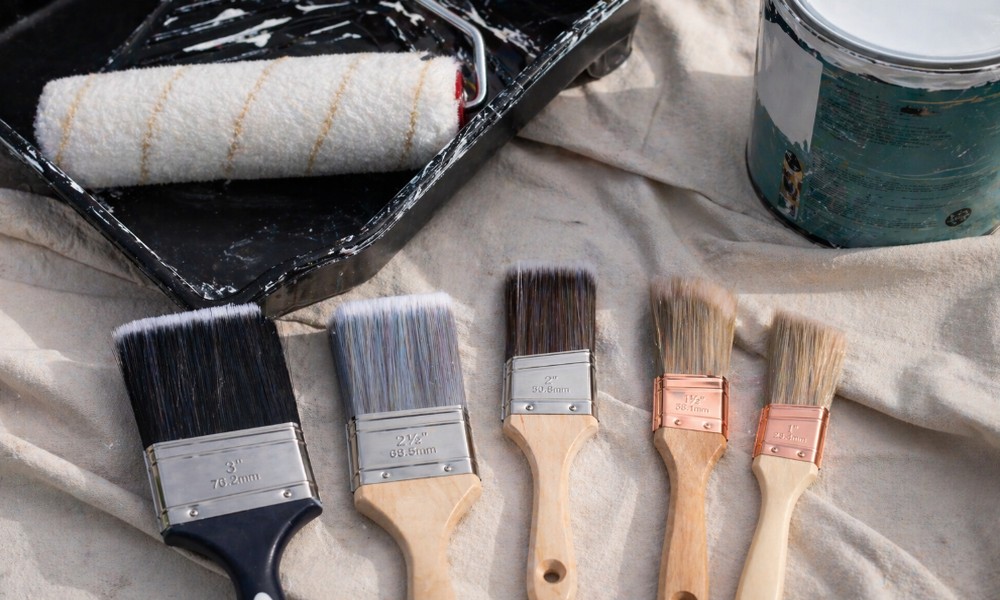
A lot of painting problems start before the paint even goes on the wall. People usually think the color is the hard part, but honestly, choosing the right brush or roller matters just as much. Sometimes more. You can buy good paint, prep the surface well, and still end up with streaks, lint, brush marks, or an uneven finish just because the tool was not the right fit for the job.
That is why it helps to understand the basics before you start.
The first thing to know is that paint brushes and rollers are not interchangeable for every project. They both apply paint, yes, but they do it differently. A brush gives you more control. A roller gives you more speed and coverage. Most painting jobs actually use both. The brush handles the edges, corners, trim, and detailed areas. The roller covers the larger flat surfaces.
So, if you are painting a wall, you will probably need both a brush and a roller. If you are painting trim, cabinets, or narrow surfaces, a brush may be enough. It really depends on the shape of the area and the type of finish you want.
Let’s start with paint brushes.
Brushes come in different sizes, shapes, and bristle types. A smaller brush, like a 1.5-inch or 2-inch brush, is useful for narrow trim, edges, and detail work. A 2.5-inch angled brush is one of the most practical choices for many home projects because it gives you a good balance of coverage and control. It works well for cutting in along ceilings, painting trim, and reaching corners without feeling too bulky.
A straight brush works fine for broad, simple areas, but an angled brush is usually easier for detailed work. That angled edge helps guide the paint where you want it to go, which is helpful if your hands are not perfectly steady. Most people, I think, find angled brushes easier to use once they try them.
Bristle type matters too. Synthetic bristles are usually the best choice for water-based paints like latex or acrylic. They hold their shape well and give a smoother finish with those products. Natural bristle brushes are typically better for oil-based paints, stains, or varnishes. Using the wrong bristle type can affect how the paint spreads and how smooth the finish looks.
That part gets overlooked a lot. People sometimes buy a brush based only on price or size, then wonder why the paint is dragging or leaving marks.
Brush quality also makes a difference. A cheap brush may lose bristles, leave streaks, or wear out halfway through the project. A better brush tends to hold more paint, spread it more evenly, and create a cleaner line. It does not mean you need the most expensive option in the store, but going too cheap often causes frustration.
Now let’s talk about rollers.
Rollers are best for large, flat areas like walls and ceilings because they apply paint faster and more evenly than a brush. But not all rollers are the same. The most important thing to pay attention to is the nap, which is the thickness of the roller cover.
A short nap, like 1/4 inch, is best for very smooth surfaces. Think cabinets, doors, or smooth drywall. It gives a finer finish and reduces texture. A medium nap, around 3/8 inch, is one of the most common choices for standard interior walls. It holds enough paint to cover well without creating too much texture. A thicker nap, like 1/2 inch or more, is better for rough surfaces such as textured walls, brick, or masonry because it can reach into uneven areas more easily.
If the nap is too short for a rough surface, the roller may skip over low spots. If the nap is too thick for a smooth wall, it can leave too much texture behind. So the surface itself should really guide your decision.
Roller material matters too. Some covers are designed for smooth finishes, while others are meant for rougher applications. Woven covers usually give a more even, durable finish. Foam rollers can work well on very smooth surfaces like doors or cabinets, especially when you want a sleek look. Still, foam rollers are not always the best choice for regular walls because they can create slipping or uneven coverage if not used carefully.
One simple way to think about it is this. Smooth surfaces need smoother tools. Rough surfaces need thicker, more forgiving tools.
It also helps to match the tool to the kind of paint you are using. Thicker paints may work better with certain roller covers, while thinner paints may spread more easily with others. The label on the brush or roller usually gives a clue about what it is made for, and that is worth checking before you buy.
Another thing people forget is comfort. If you are painting for more than a few minutes, the handle matters. A brush that feels awkward in your hand can make clean lines harder to control. A roller frame that feels flimsy can make the whole job more tiring. It sounds minor, but after an hour or two, it definitely matters.
For most standard room painting projects, a practical setup would be a 2.5-inch angled brush for cutting in and trim, plus a 9-inch roller with a 3/8-inch nap for the walls. That combination handles a lot of common painting jobs pretty well. If you are painting furniture, cabinets, or doors, you may want a smaller brush and possibly a foam or short-nap roller for a smoother finish.
It is also smart to think about the final look you want. Some projects need speed more than perfection, like a garage wall or storage room. Other projects, like trim, cabinets, or a front door, need more control and a cleaner finish. The better the finish matters, the more careful you should be with tool selection.
In the end, choosing the right paint brush or roller is really about matching the tool to the project. Look at the size of the area, the smoothness of the surface, the type of paint, and the level of detail you need. A brush is best for control. A roller is best for coverage. Most projects need both.
When the tool fits the job, painting feels easier. The finish looks better. And you spend less time fixing mistakes, which is honestly something every homeowner wants.
This post was written by a professional at Anawalt Lumber. Anawalt Lumber is a family-owned lumber yard and hardware store serving Los Angeles for over a century. Known for quality lumber, contractor supplies, hardware store West Hollywood, and a full-service nursery, Anawalt provides personalized service for homeowners and licensed contractors. From job pricing and bulk discounts to special-order materials with fast delivery, Anawalt is your trusted local building supply partner in Malibu, West LA, and Hollywood.
